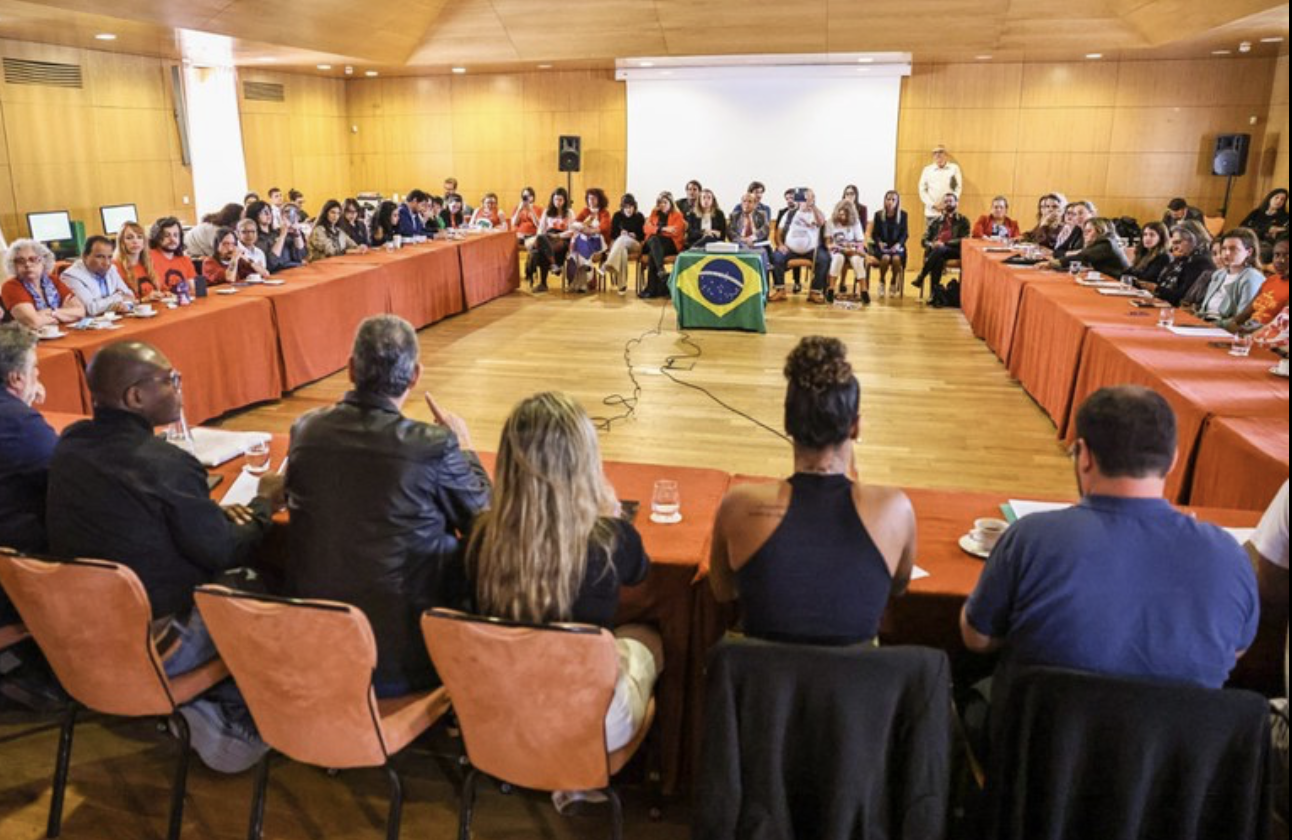
The ministers of the General Secretariat of the Presidency of the Republic, Márcio Macêdo; of Human Rights and Citizenship, Sílvio Almeida; of Racial Equality, Anielle Franco; and the president of Embratur, Marcelo Freixo, met in Lisbon this Sunday (23/4/23) with representatives of social movements from Brazilian communities in Portugal and various locations in Europe.
Representatives of social movements spoke: Freda Paranhos, president of TransParadise, representing migrant travestis in Portugal, discussed the difficulties of entering the job market, the daily exposure to violence, and the agenda for using the chosen name on residence permit documents and changing name and gender on official documents for the trans migrant population.
These changes were only possible after returning to Brazil.
One of TransParadise’s struggles in advocating for the rights of the trans migrant population was the correction of name and/or gender on official documents. Until that moment, this action was only possible by returning to Brazil for in-person correction or by appointing a legal representative. Both options were financially incongruent with the reality of a significant portion of the population and also posed security concerns for individuals in asylum situations. In April of 2023, during the visit of the Brazilian presidential delegation to Portugal, we presented this demand to the Honorable Minister of Human Rights, Sílvio de Almeida, who committed to supporting it.
Our demands were heard
Finally, the Ministry of Foreign Affairs announced in October 2023 that the correction of name and gender can now be done through consulates and embassies of the respective countries. As provided in the new Brazilian Consular Regulation, it is now possible to initiate the annotation of name and gender on Brazilian documents for transgender individuals abroad through the Brazilian consular network.
To do so, it is necessary to gather some documents to initiate the request, and after this step, schedule an appointment and/or address questions via email.
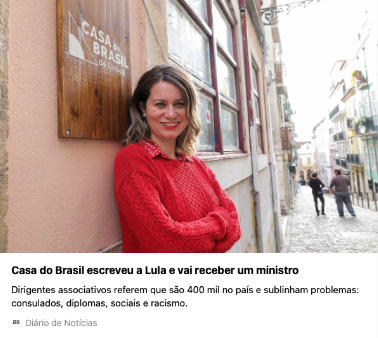
Our efforts also involved internal entities, such as the State Secretariat for Equality and Migrations, and collaborations with the Casa do Brasil in Lisbon and Opus Diversidades, in conjunction with public bodies related to health, human rights, and justice in Portugal, so that we could at least have the right to use our social names on our residence permits. A letter was also written on behalf of the Casa do Brasil de Lisboa, an association where one of the founders of TransParadise, Freda Paranhos, works and contributes to building agendas related to gender and migration. This letter was addressed to President Luís Inácio Lula da Silva, outlining concerns about the challenges faced in Brazilian consulates in Portugal, obstacles to obtaining recognition of higher education degrees, and issues encountered by the Brazilian community, such as racism, xenophobia, and difficulties in sustaining themselves in Portugal. Among the demands in the letter was: ‘It is also essential to develop joint actions to combat discrimination based on sexual orientation and gender identity.’
In the news